هندسة مرة واحدة، نشر متعدد.
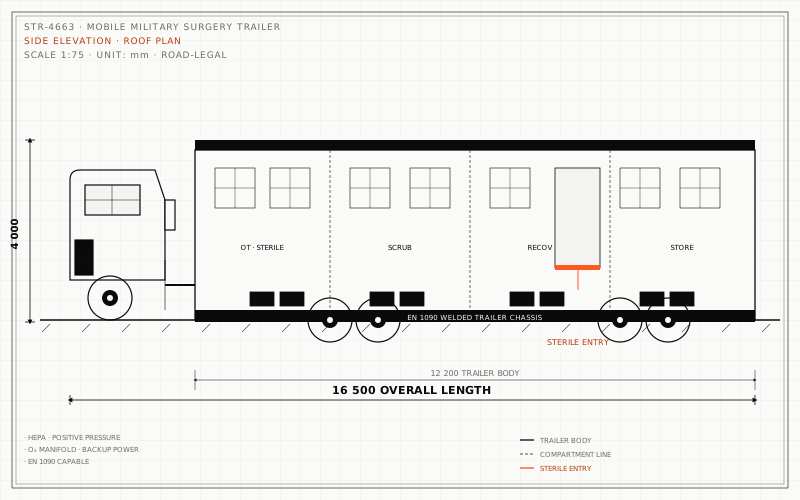
A mobile military surgery trailer is a road-deployable forward surgical facility engineered for damage-control surgery in expeditionary military operations. structmod mobile military surgery trailers deliver NATO Role 2 forward surgical capability — sized to stabilise battlefield casualties before evacuation to higher-echelon care, with the rugged engineering and operational mobility that forward surgical teams (FSTs) and shock trauma platoons require. The trailer-based configuration deploys with the supported formation and positions for damage-control surgery within the 'golden hour' that trauma outcomes depend on.
Standard configurations include the operating theatre (typical 20-25 m² with HEPA H13 ventilation approaching ISO 14644 class 7), anaesthesia workstation with gas scavenging, scrub sink bay at the theatre entrance, clean preparation zone, dirty instrument return, 2-4 bed recovery and patient holding ward, and supporting clinical spaces (medication preparation, sterile stock, biomedical engineering bench). Medical gas reticulation per ISO 9170 with cylinder-bank backup; medical electrical per IEC 60364-7-710 Group 2 with isolated power and UPS; optional ballistic envelope per STANAG 4569 Level III/IV for operations under small-arms threat.
structmod mobile military surgery trailers serve forward surgical teams operating ahead of Role 3 combat support hospitals, shock trauma platoons supporting maneuver units, expeditionary medical forces providing pre-hospital damage control surgery, and humanitarian-military operations where surgical capability must move with the operational picture. Lead time is 12-14 weeks from contract signature for stock configurations, 14-18 weeks for configurations with extended holding, ICU integration, or ballistic envelope. NATO STANAG 2560 medical evaluation criteria, AMedP-9.1 modular medical support principles, and STANAG 2345 MEDEVAC interface compatibility guide the design. Clinical commissioning includes microbiological air sampling and surgical workflow validation before first clinical use.
تسلسل النشر النموذجي
- الساعة 0 — وصول المقطورة على مركبة السحب، التمركز والتثبيت
- الساعة 0–1 — فرد أرجل التثبيت والتحقق من التسوية
- الساعة 1–2 — فرد الجدران الهيدروليكية أو التوسعات حيث مثبتة
- الساعة 2–3 — توصيل المرافق (طاقة، مياه، صرف)
- الساعة 3–4 — الاختبار الوظيفي وفق بروتوكول FAT
- الساعة 4 — التسليم التشغيلي مع تدريب المستخدمين
Spec sheet — STR-3182
| الطول الكلي | 14.2 m · 46.6 ft |
|---|---|
| العرض (أثناء النقل) | 2.99 م |
| العرض (بعد الفرد) | 2.99 م |
| الارتفاع (أثناء النقل) | 2.90 م |
| مساحة الأرضية (بعد الفرد) | 42.5 m² |
| الوزن الفارغ | 14.2 t |
| الهيكل | فولاذ مُدرفل على الساخن EN 10025 S355JR · EN 1090 EXC-2 |
| جودة اللحام | EN ISO 3834-3 |
| الغلاف | لوح ساندويتش، نواة PIR 80 مم · λ ≈ 0.023 واط/(م·كلفن) |
| مقاومة الحريق | EI-30 · مُختبر وفق EN 13501-2 |
| الأرضية | خشب رقائقي بحري على EPDM · تصنيف مقاومة انزلاق R-10 |
| الكهرباء | 120/240 فولت · 60 هرتز (مواصفات أمريكية) · مطابق IEC 60364 |
| التكييف والتهوية | وحدة سقفية متكاملة · MERV-13 |
| نطاق التشغيل | −25 °م إلى +50 °م (محيط) |
| مقاومة الرياح | مُصمَّم لرياح أساسية 150 كم/س (EN 1991-1-4) |
| النقل | بصمة ISO 668 · مؤهّل للوحة CSC (الإصدارات الحاوية) |
| زمن التجهيز | 4 ساعات · طاقم شخصين |
Full drawings, calculation notes, DoP, O&M manual and FAT report included with every unit. Specs indicative — configurable to project requirements.