هندسة مرة واحدة، نشر متعدد.
A modular emergency care hospital is a permanent emergency department wing built from prefabricated modules organised around the standard ED workflow — triage at entry, resuscitation bays for life-threatening presentations, treatment bays for urgent and standard cases, and a short-stay observation area for patients awaiting admission, discharge or transfer. structmod modular emergency care hospitals serve hospitals expanding ED capacity to meet rising patient volumes, replacing aging ED infrastructure during refurbishment, or building new emergency capability at hospitals or stand-alone urgent care centres. The 12-18 week turnkey delivery compresses the conventional 12-24 month ED construction timeline.
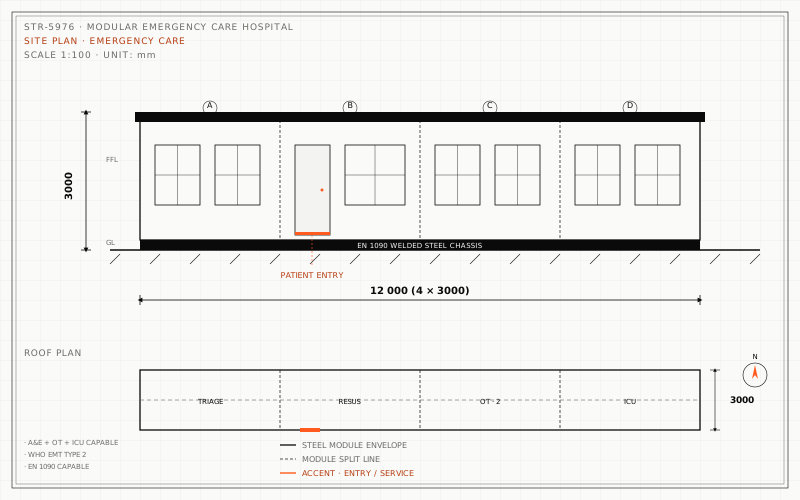
Standard configurations include the ambulance entrance with trolley reception, triage cubicles for initial clinical screening, 2-3 resuscitation bays equipped for cardiac arrest, major trauma and airway emergencies (full monitoring, defibrillation, airway management, ventilation, surgical airway capability), 8-16 treatment bays for urgent and standard presentations (examination couches with monitoring, IV access, medication trolleys), a short-stay observation ward (4-12 beds) for patients awaiting decision, supporting clinical spaces (clean and dirty utility, drug room, plaster room, paediatric assessment, mental health assessment cubicle) and ED-specific clinical workflow (POCUS access, x-ray imaging integration, lab sample transport, emergency medication automation).
structmod modular emergency care hospitals deliver to hospitals across Europe, the Gulf and Africa where ED capacity expansion is a priority, to national health programmes building urgent care capability, and to humanitarian agencies establishing emergency referral capacity in extended deployments. Lead time is 14-18 weeks from contract signature for stock configurations, 18-24 weeks for customised configurations including specialty ED capabilities (paediatric ED, mental health crisis service, infectious disease isolation). Clinical commissioning validates emergency workflow, monitoring, life-safety systems and infection control before clinical opening.
تسلسل النشر النموذجي
- اليوم 1 — التحقق من أساس الموقع، تركيب الأرجل الملولبة أو الأساسات الشريطية
- اليوم 2–3 — رفع الوحدات إلى مواقعها بواسطة رافعة متنقلة
- اليوم 3–4 — توصيل الوحدات وإحكام الغلاف
- اليوم 4–5 — توصيلات MEP، الاختبارات الرطبة
- اليوم 5–6 — التشطيب الداخلي، تركيب التجهيزات والمعدات
- اليوم 7 — التشغيل، تقرير FAT، تدريب المستخدمين والتسليم
Spec sheet — STR-3129
| الطول الكلي | 12.9 m · 42.3 ft |
|---|---|
| العرض (أثناء النقل) | 2.99 م |
| العرض (بعد الفرد) | 2.99 م |
| الارتفاع (أثناء النقل) | 3.00 م |
| مساحة الأرضية (بعد الفرد) | 38.6 m² |
| الوزن الفارغ | 15.9 t |
| الهيكل | فولاذ مُدرفل على الساخن EN 10025 S355JR · EN 1090 EXC-2 |
| جودة اللحام | EN ISO 3834-3 |
| الغلاف | لوح ساندويتش، نواة PIR 80 مم · λ ≈ 0.023 واط/(م·كلفن) |
| مقاومة الحريق | EI-30 · مُختبر وفق EN 13501-2 |
| الأرضية | خشب رقائقي بحري على EPDM · تصنيف مقاومة انزلاق R-10 |
| الكهرباء | 230 فولت / 50 هرتز · TN-S · مطابق IEC 60364 |
| التكييف والتهوية | مضخة حرارية Split Inverter · MERV-8 |
| نطاق التشغيل | −25 °م إلى +50 °م (محيط) |
| مقاومة الرياح | مُصمَّم لرياح أساسية 130 كم/س (EN 1991-1-4) |
| التصميم الزلزالي | وفق EN 1998-1 (يوروكود 8) · فئة مطيلية DCM |
| النقل | بصمة ISO 668 · مؤهّل للوحة CSC (الإصدارات الحاوية) |
| زمن التجهيز | 2–7 أيام في الموقع |
Full drawings, calculation notes, DoP, O&M manual and FAT report included with every unit. Specs indicative — configurable to project requirements.