هندسة مرة واحدة، نشر متعدد.
A modular military surgery unit is a forward-deployed surgical facility built from prefabricated modules with the operating theatre, anaesthesia, scrub bay, recovery and patient holding capability required for damage-control surgery in expeditionary military operations. structmod modular military surgery units provide NATO Role 2 forward surgical capability — sized to stabilise battlefield casualties before evacuation to higher-echelon care, with the rugged engineering and infection-control performance that field surgery demands. The modular construction approach allows the surgical unit to deploy with the supported formation, then redeploy as the operational picture changes.
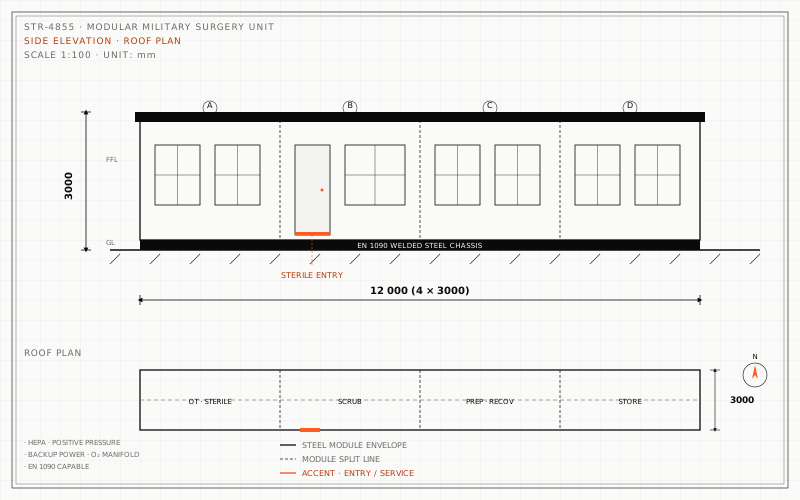
Standard configurations include the operating theatre (UK HBN 26-01 equivalent or ISO 14644 class 7 ultra-clean ventilation), anaesthesia workstation with gas scavenging, scrub sink bay at the theatre entrance, clean preparation zone, dirty instrument return, 4-6 bed recovery and patient holding ward, and supporting clinical spaces (medication preparation, sterile stock, biomedical engineering bench). Medical gas reticulation per ISO 9170 with cylinder-bank backup; medical electrical per IEC 60364-7-710 Group 2 with isolated power and UPS; environmental control per CBRN-protective configuration where threat assessment requires. Operating theatre environment is validated through microbiological commissioning before clinical use.
structmod modular military surgery units serve forward surgical teams (FST), shock trauma platoons, expeditionary medical units, and battalion aid stations operating beyond Role 1 capability. NATO STANAG 2560 medical evaluation criteria, AMedP-9.1 modular medical support principles, and STANAG 2345 MEDEVAC interface compatibility guide the design. Lead time is 12-14 weeks from contract signature for stock configurations, 14-18 weeks for configurations with extended holding, ICU integration or ballistic envelope. Clinical commissioning includes microbiological air sampling, equipment calibration and surgical workflow validation per the deploying service's clinical protocols.
تسلسل النشر النموذجي
- اليوم 1 — التحقق من أساس الموقع، تركيب الأرجل الملولبة أو الأساسات الشريطية
- اليوم 2–3 — رفع الوحدات إلى مواقعها بواسطة رافعة متنقلة
- اليوم 3–4 — توصيل الوحدات وإحكام الغلاف
- اليوم 4–5 — توصيلات MEP، الاختبارات الرطبة
- اليوم 5–6 — التشطيب الداخلي، تركيب التجهيزات والمعدات
- اليوم 7 — التشغيل، تقرير FAT، تدريب المستخدمين والتسليم
Spec sheet — STR-2999
| الطول الكلي | 15.9 m · 52.2 ft |
|---|---|
| العرض (أثناء النقل) | 2.99 م |
| العرض (بعد الفرد) | 2.99 م |
| الارتفاع (أثناء النقل) | 3.20 m |
| مساحة الأرضية (بعد الفرد) | 47.5 m² |
| الوزن الفارغ | 11.9 t |
| الهيكل | فولاذ مُدرفل على الساخن EN 10025 S355JR · EN 1090 EXC-2 |
| جودة اللحام | EN ISO 3834-3 |
| الغلاف | لوح ساندويتش، نواة PIR 80 مم · λ ≈ 0.023 واط/(م·كلفن) |
| مقاومة الحريق | EI-30 · مُختبر وفق EN 13501-2 |
| الأرضية | خشب رقائقي بحري على EPDM · تصنيف مقاومة انزلاق R-10 |
| الكهرباء | 120/240 فولت · 60 هرتز (مواصفات أمريكية) · مطابق IEC 60364 |
| التكييف والتهوية | وحدة سقفية متكاملة · MERV-13 |
| نطاق التشغيل | −25 °م إلى +50 °م (محيط) |
| مقاومة الرياح | مُصمَّم لرياح أساسية 150 كم/س (EN 1991-1-4) |
| التصميم الزلزالي | وفق EN 1998-1 (يوروكود 8) · فئة مطيلية DCM |
| النقل | بصمة ISO 668 · مؤهّل للوحة CSC (الإصدارات الحاوية) |
| زمن التجهيز | 2–7 أيام في الموقع |
Full drawings, calculation notes, DoP, O&M manual and FAT report included with every unit. Specs indicative — configurable to project requirements.