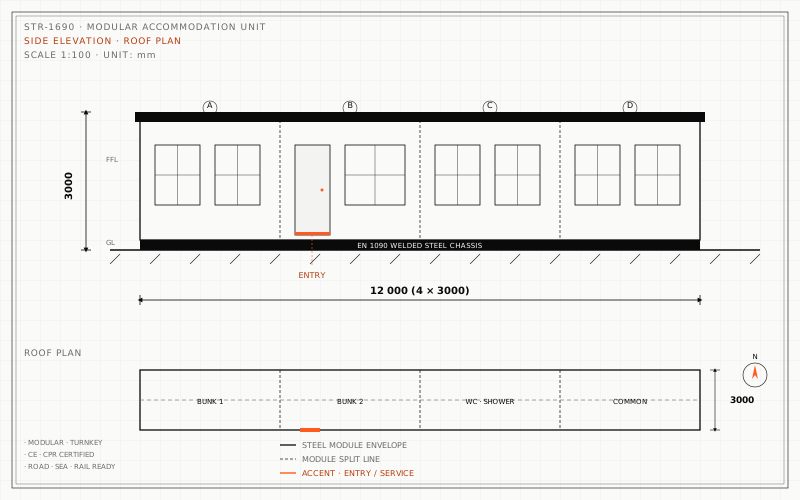
Engineered once, deployable many times.
A modular accommodation unit is a permanent or relocatable workforce accommodation building assembled from prefabricated modules with the bedrooms, bathrooms, communal areas and supporting infrastructure required for sustained workforce occupancy. structmod modular accommodation units serve mining and oil & gas operators housing site workforces, defence forces accommodating deployed personnel, construction project camps housing trade workers, infrastructure project camps for utilities and energy contractors, and humanitarian deployments accommodating relief workforces. The 8-12 week turnkey delivery is critical when workforce mobilisation drives the project critical path.
Standard configurations include 1-bed, 2-bed and 4-bed bedroom variants — each with attached bathroom (en-suite for 1 and 2-bed, shared between adjacent rooms for 4-bed), built-in storage, work desk space, and HVAC for occupant comfort. Communal areas in larger camp configurations include lounges, dining rooms, kitchen facilities, laundry rooms, gym/recreation space, and outdoor smoking areas. Single-storey configurations support smaller camps (50-200 occupants); 2-3 storey stackable configurations push capacity above 500 occupants per camp on a constrained footprint. Accommodation density follows the operating organisation's standards — typically 9-14 m² per occupant for 1-bed, 12-18 m² for 2-bed, 16-24 m² for 4-bed including circulation and shared facilities.
structmod modular accommodation units serve workforce camp operators in mining (gold, copper, iron ore, coal mining), oil & gas (LNG plants, FPSO support, refinery turnarounds, pipeline construction), defence (peacekeeping deployments, training establishments, expeditionary bases), construction (infrastructure mega-projects, large industrial builds), and humanitarian response (refugee camps, disaster response staging). Lead time is 8-12 weeks for stock configurations, 12-16 weeks for camp-scale projects with multiple integrated buildings. Compliance includes destination-country accommodation building code, fire safety and life safety per applicable national standard, and any operating organisation accommodation standard (defence, mining sector quality benchmarks).
Secuencia de despliegue típica
- Día 1 — cimentación del emplazamiento verificada, gatos de tornillo o zapatas corridas colocados
- Días 2–3 — módulos elevados a posición con grúa móvil
- Días 3–4 — conexiones entre módulos y sellado de envolvente
- Días 4–5 — conexiones MEP, pruebas húmedas
- Días 5–6 — acabados interiores, instalación de accesorios y equipos
- Día 7 — puesta en marcha, informe FAT, formación y entrega
Spec sheet — STR-2668
| Longitud total | 14.8 m · 48.6 ft |
|---|---|
| Anchura (transporte) | 2,99 m |
| Anchura (desplegado) | 2,99 m |
| Altura (transporte) | 3.10 m |
| Superficie (desplegado) | 44.3 m² |
| Peso en seco | 13.8 t |
| Chasis | Acero laminado en caliente EN 10025 S355JR · EN 1090 EXC-2 |
| Calidad de soldadura | EN ISO 3834-3 |
| Envolvente | Panel sándwich, núcleo PIR 80 mm · λ ≈ 0,023 W/(m·K) |
| Resistencia al fuego | EI-30 · ensayado según EN 13501-2 |
| Suelo | Contrachapado marino sobre EPDM · clasificación antideslizante R-10 |
| Instalación eléctrica | 400 V / 50 Hz · trifásico · conforme IEC 60364 |
| Climatización | VRF multi-split · HEPA H13 (médica) |
| Rango de operación | −25 °C a +50 °C ambiente |
| Clasificación de viento | Diseñado para viento básico de 140 km/h (EN 1991-1-4) |
| Diseño sísmico | Según EN 1998-1 (Eurocódigo 8) · clase de ductilidad DCM |
| Transporte | Huella ISO 668 · apto para placa CSC (variantes contenedor) |
| Tiempo de montaje | 5 horas · equipo de 2 personas |
Full drawings, calculation notes, DoP, O&M manual and FAT report included with every unit. Specs indicative — configurable to project requirements.