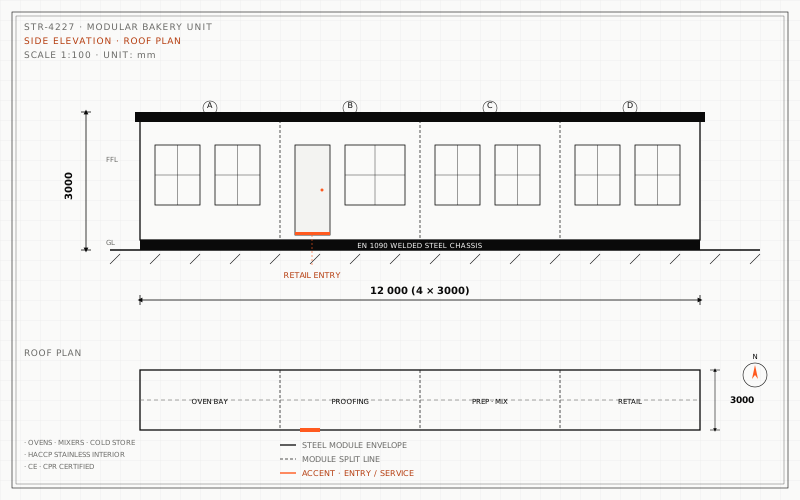
Engineered once, deployable many times.
A modular bakery unit is a permanent or relocatable industrial bakery facility built from prefabricated modules with the production zones, equipment infrastructure and food safety workflow required for commercial bread, pastry or specialty bakery production. structmod modular bakery units serve workforce camp catering chains needing dedicated bakery production for large workforces, industrial food processors expanding bakery capacity rapidly, retail bakery chains opening new production locations, and humanitarian programmes needing large-scale bread production for refugee or displaced populations. The 10-14 week turnkey delivery shortens the conventional bakery construction timeline by 60-70%.
Standard configurations organise the bakery around the production workflow: ingredient receiving and storage (dry goods, flour silo or bag storage, refrigerated and frozen ingredients), mixer room with industrial dough mixers and dividers (sized to production volume — typically 200-2,000 kg dough per hour), proofing chamber with controlled temperature and humidity for dough fermentation, oven hall with deck ovens, rotary ovens or tunnel ovens (sized to baked goods volume), cooling area for fresh-out-of-oven products, packing line with packaging equipment, finished goods cold storage for shelf-life management, and supporting spaces (office, washroom, locker room, cleaning equipment store). HACCP compliance follows ISO 22000 principles throughout.
structmod modular bakery units serve catering chains operating workforce camps (mining, oil & gas, construction camps that produce 5,000-20,000 bread units daily for resident workforces), industrial food companies expanding production capacity, retail bakery operators opening regional production hubs, military catering services running theatre-level bakery production, and humanitarian agencies running bread distribution programmes (UN World Food Programme bakery operations in protracted refugee situations). Lead time is 10-14 weeks from contract signature for stock configurations. Compliance covers ISO 22000 food safety, NFPA 96 ventilation, IEC 60364-1 commercial electrical, and destination-country food production regulation.
Secuencia de despliegue típica
- Día 1 — cimentación del emplazamiento verificada, gatos de tornillo o zapatas corridas colocados
- Días 2–3 — módulos elevados a posición con grúa móvil
- Días 3–4 — conexiones entre módulos y sellado de envolvente
- Días 4–5 — conexiones MEP, pruebas húmedas
- Días 5–6 — acabados interiores, instalación de accesorios y equipos
- Día 7 — puesta en marcha, informe FAT, formación y entrega
Spec sheet — STR-1932
| Longitud total | 13.2 m · 43.3 ft |
|---|---|
| Anchura (transporte) | 2,99 m |
| Anchura (desplegado) | 2,99 m |
| Altura (transporte) | 2.70 m |
| Superficie (desplegado) | 39.5 m² |
| Peso en seco | 15.2 t |
| Chasis | Acero laminado en caliente EN 10025 S355JR · EN 1090 EXC-2 |
| Calidad de soldadura | EN ISO 3834-3 |
| Envolvente | Panel sándwich, núcleo PIR 80 mm · λ ≈ 0,023 W/(m·K) |
| Resistencia al fuego | EI-30 · ensayado según EN 13501-2 |
| Suelo | Contrachapado marino sobre EPDM · clasificación antideslizante R-10 |
| Instalación eléctrica | 230 V / 50 Hz · TN-S · conforme IEC 60364 |
| Climatización | Bomba de calor inverter split · MERV-8 |
| Rango de operación | −25 °C a +50 °C ambiente |
| Clasificación de viento | Diseñado para viento básico de 130 km/h (EN 1991-1-4) |
| Diseño sísmico | Según EN 1998-1 (Eurocódigo 8) · clase de ductilidad DCM |
| Transporte | Huella ISO 668 · apto para placa CSC (variantes contenedor) |
| Tiempo de montaje | 4 horas · equipo de 2 personas |
Full drawings, calculation notes, DoP, O&M manual and FAT report included with every unit. Specs indicative — configurable to project requirements.