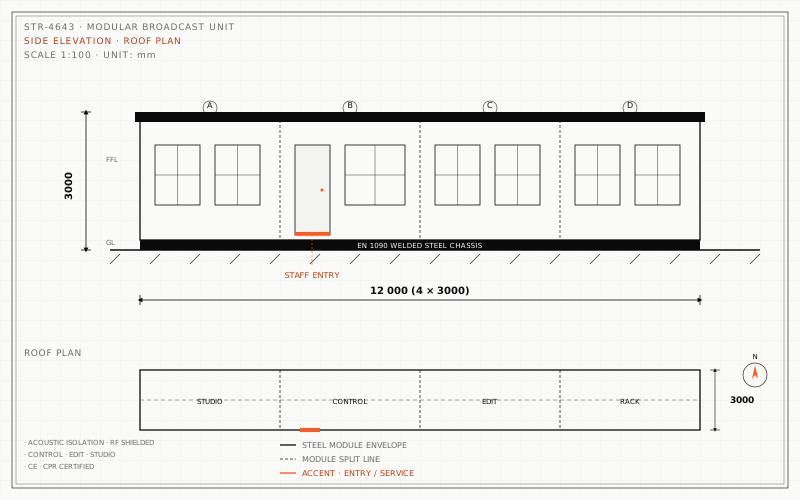
Engineered once, deployable many times.
A modular broadcast unit is a permanent broadcast production facility built from prefabricated modules with the studio space, control room, technical infrastructure, acoustic isolation and supporting spaces required for television, radio, podcast or streaming production. structmod modular broadcast units serve regional television and radio broadcasters expanding production capacity, sports broadcasters establishing dedicated venue facilities, corporate broadcast operators (training, internal communication, customer-facing live events), university and educational broadcasters running communications programmes, and political/news organisations setting up dedicated broadcast capability. The 12-16 week turnkey delivery is critical when broadcast launch dates drive the project schedule.
Standard configurations include studio space (typical 30-80 m² for general production, larger for major productions) with broadcast-grade acoustic isolation (typical NR-25 or quieter background noise level, 50-60 dB sound transmission class wall partitions), control room with director's desk, audio mixing position, video switching and graphics workstations, equipment rack room with broadcast servers, encoders, transmitters and patch infrastructure, presentation area for talent prep, makeup and green room, and supporting technical spaces (engineering office, IT/IP infrastructure, master control). Lighting grids in studio space support broadcast lighting (typical 50+ kg/m² ceiling load capacity for lighting fixtures).
structmod modular broadcast units serve broadcasters worldwide where rapid facility delivery matters: regional television opening news bureaus in expanding markets, sports broadcasters establishing facilities at venues, corporate communications operators, religious broadcasters expanding their coverage, and political/news organisations setting up dedicated facilities ahead of major events (elections, summits). Lead time is 12-16 weeks from contract signature for stock configurations, 14-18 weeks for configurations including major-production studios or specialty acoustic treatment. EN 1090 EXC-2 structural, IEC 60364-1 commercial electrical with broadcast-grade earthing/bonding, EMI/EMC compliance for sensitive broadcast equipment.
Secuencia de despliegue típica
- Día 1 — cimentación del emplazamiento verificada, gatos de tornillo o zapatas corridas colocados
- Días 2–3 — módulos elevados a posición con grúa móvil
- Días 3–4 — conexiones entre módulos y sellado de envolvente
- Días 4–5 — conexiones MEP, pruebas húmedas
- Días 5–6 — acabados interiores, instalación de accesorios y equipos
- Día 7 — puesta en marcha, informe FAT, formación y entrega
Spec sheet — STR-2241
| Longitud total | 12.1 m · 39.7 ft |
|---|---|
| Anchura (transporte) | 2,99 m |
| Anchura (desplegado) | 2,99 m |
| Altura (transporte) | 3,00 m |
| Superficie (desplegado) | 36.2 m² |
| Peso en seco | 9.1 t |
| Chasis | Acero laminado en caliente EN 10025 S355JR · EN 1090 EXC-2 |
| Calidad de soldadura | EN ISO 3834-3 |
| Envolvente | Panel sándwich, núcleo PIR 80 mm · λ ≈ 0,023 W/(m·K) |
| Resistencia al fuego | EI-30 · ensayado según EN 13501-2 |
| Suelo | Contrachapado marino sobre EPDM · clasificación antideslizante R-10 |
| Instalación eléctrica | 230 V / 50 Hz · TN-S · conforme IEC 60364 |
| Climatización | Bomba de calor inverter split · MERV-8 |
| Rango de operación | −25 °C a +50 °C ambiente |
| Clasificación de viento | Diseñado para viento básico de 130 km/h (EN 1991-1-4) |
| Diseño sísmico | Según EN 1998-1 (Eurocódigo 8) · clase de ductilidad DCM |
| Transporte | Huella ISO 668 · apto para placa CSC (variantes contenedor) |
| Tiempo de montaje | 3 horas · equipo de 2 personas |
Full drawings, calculation notes, DoP, O&M manual and FAT report included with every unit. Specs indicative — configurable to project requirements.