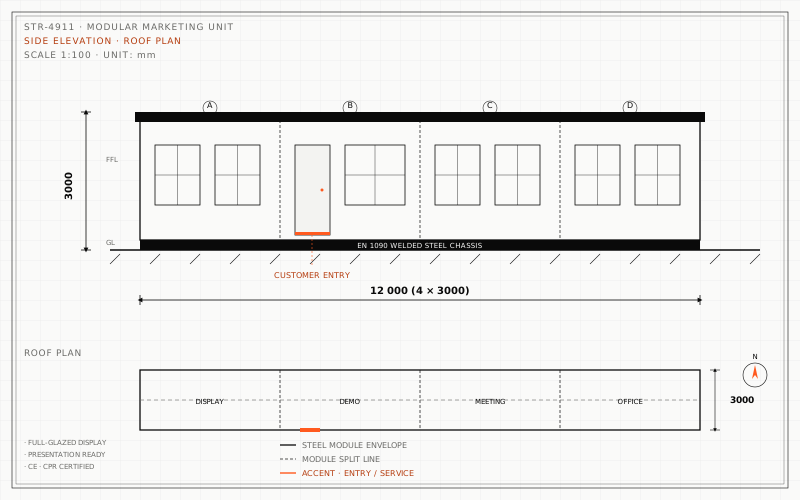
Engineered once, deployable many times.
A modular marketing unit is a brand pavilion or marketing activation building delivered as prefabricated modules with the flexible facade systems, AV infrastructure and event-ready interior fit-out that brand activations and trade exhibitions require. structmod modular marketing units serve corporate brand teams running activation tours, trade show organisers establishing pavilion-scale exhibitor presence, automotive brands launching new vehicles at multiple cities, technology brands running product demonstration tours, and entertainment brands creating immersive brand experiences. The modular construction approach delivers brand-quality activation buildings that ship between activation locations.
Standard configurations include a brand-flexible facade system (panels, fabric, LED screen options that change between activation campaigns), main pavilion interior space sized to the activation programme (typical 50-200 m² for product display, presentation area, hospitality zone), AV pre-installation (audio system, video walls or projection, DMX lighting control, PA system), back-of-house support spaces (storage, wardrobe for talent, refreshments preparation), and supporting infrastructure (climate control sized to seasonal activation, accessibility-compliant entry, security). Stage options range from small product reveal stage to full performance stage with appropriate sound and lighting. Configuration flexibility supports the same modular building serving multiple brand campaigns across its lifecycle.
structmod modular marketing units serve brand activation budgets where the activation must be premium-quality and consistent across multiple locations, while remaining cost-effective compared to one-off conventional construction at each location. Common applications: automotive brand launches (BMW, Mercedes-Benz, Audi premium model launches), technology product tours (Apple, Samsung, Microsoft launch tours), beverage brand campaigns (Heineken, Coca-Cola activation programmes), entertainment brand activations (Netflix series promotion tours, gaming brand campaigns). Lead time is 12-14 weeks from contract signature for first deployment; subsequent activation campaigns reuse the building with refresh of brand-specific elements. EN 1090 EXC-2 structural for permanent or semi-permanent installation, with road-transport configurations for tour applications.
Secuencia de despliegue típica
- Día 1 — cimentación del emplazamiento verificada, gatos de tornillo o zapatas corridas colocados
- Días 2–3 — módulos elevados a posición con grúa móvil
- Días 3–4 — conexiones entre módulos y sellado de envolvente
- Días 4–5 — conexiones MEP, pruebas húmedas
- Días 5–6 — acabados interiores, instalación de accesorios y equipos
- Día 7 — puesta en marcha, informe FAT, formación y entrega
Spec sheet — STR-2256
| Longitud total | 13.6 m · 44.6 ft |
|---|---|
| Anchura (transporte) | 2,99 m |
| Anchura (desplegado) | 2,99 m |
| Altura (transporte) | 2.70 m |
| Superficie (desplegado) | 40.7 m² |
| Peso en seco | 15.6 t |
| Chasis | Acero laminado en caliente EN 10025 S355JR · EN 1090 EXC-2 |
| Calidad de soldadura | EN ISO 3834-3 |
| Envolvente | Panel sándwich, núcleo PIR 80 mm · λ ≈ 0,023 W/(m·K) |
| Resistencia al fuego | EI-30 · ensayado según EN 13501-2 |
| Suelo | Contrachapado marino sobre EPDM · clasificación antideslizante R-10 |
| Instalación eléctrica | 230 V / 50 Hz · TN-S · conforme IEC 60364 |
| Climatización | Bomba de calor inverter split · MERV-8 |
| Rango de operación | −25 °C a +50 °C ambiente |
| Clasificación de viento | Diseñado para viento básico de 130 km/h (EN 1991-1-4) |
| Diseño sísmico | Según EN 1998-1 (Eurocódigo 8) · clase de ductilidad DCM |
| Transporte | Huella ISO 668 · apto para placa CSC (variantes contenedor) |
| Tiempo de montaje | 3 horas · equipo de 2 personas |
Full drawings, calculation notes, DoP, O&M manual and FAT report included with every unit. Specs indicative — configurable to project requirements.