Engineered once, deployable many times.
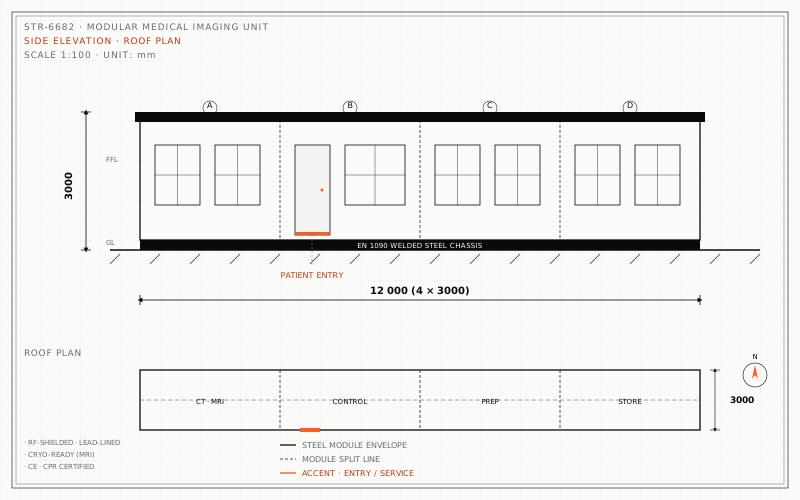
A modular medical imaging unit is a complete radiology department built from prefabricated modules — multiple imaging modalities, shared reading and reporting infrastructure, integrated patient flow, and clinical support spaces — delivered as a permanent installation in 14-20 weeks turnkey rather than the conventional 18-30 month build. structmod modular medical imaging units serve hospitals expanding diagnostic imaging capacity, replacing legacy radiology departments during major refurbishment, building stand-alone diagnostic centres, or extending into specialty imaging beyond the existing capability.
Standard imaging unit configurations include x-ray rooms (typically 2-4 general radiography rooms with lead shielding), CT room (lead-shielded per NCRP Report 147 with vibration-isolated foundation), MRI suite (full RF cage with 5-gauss line management), 2-3 ultrasound rooms (general and obstetric), fluoroscopy room (where specified), interventional radiology suite (where specified), shared reading room with PACS workstations, technician areas, patient preparation and recovery, and reception/waiting flow. The integrated unit allows efficient staffing, equipment sharing where appropriate, and consolidated patient flow management.
structmod modular medical imaging units deliver to hospitals across European, Gulf and African markets where imaging capacity expansion is a strategic priority, to private diagnostic centre chains opening new locations, and to specialty hospitals integrating advanced imaging capability. Lead time is 14-20 weeks from contract signature for stock configurations, 18-26 weeks for specialty configurations including PET-CT, advanced MRI, or interventional radiology. OEM scanner integration timeline depends on equipment specification and supply chain. Full department commissioning includes radiation safety survey, equipment calibration, PACS/RIS integration testing, and clinical workflow validation.
Secuencia de despliegue típica
- Día 1 — cimentación del emplazamiento verificada, gatos de tornillo o zapatas corridas colocados
- Días 2–3 — módulos elevados a posición con grúa móvil
- Días 3–4 — conexiones entre módulos y sellado de envolvente
- Días 4–5 — conexiones MEP, pruebas húmedas
- Días 5–6 — acabados interiores, instalación de accesorios y equipos
- Día 7 — puesta en marcha, informe FAT, formación y entrega
Spec sheet — STR-2790
| Longitud total | 15.0 m · 49.2 ft |
|---|---|
| Anchura (transporte) | 2,99 m |
| Anchura (desplegado) | 2,99 m |
| Altura (transporte) | 2.70 m |
| Superficie (desplegado) | 44.9 m² |
| Peso en seco | 9.0 t |
| Chasis | Acero laminado en caliente EN 10025 S355JR · EN 1090 EXC-2 |
| Calidad de soldadura | EN ISO 3834-3 |
| Envolvente | Panel sándwich, núcleo PIR 80 mm · λ ≈ 0,023 W/(m·K) |
| Resistencia al fuego | EI-30 · ensayado según EN 13501-2 |
| Suelo | Contrachapado marino sobre EPDM · clasificación antideslizante R-10 |
| Instalación eléctrica | 230 V / 50 Hz · TN-S · conforme IEC 60364 |
| Climatización | Bomba de calor inverter split · MERV-8 |
| Rango de operación | −25 °C a +50 °C ambiente |
| Clasificación de viento | Diseñado para viento básico de 130 km/h (EN 1991-1-4) |
| Diseño sísmico | Según EN 1998-1 (Eurocódigo 8) · clase de ductilidad DCM |
| Transporte | Huella ISO 668 · apto para placa CSC (variantes contenedor) |
| Tiempo de montaje | 2 horas · equipo de 2 personas |
Full drawings, calculation notes, DoP, O&M manual and FAT report included with every unit. Specs indicative — configurable to project requirements.