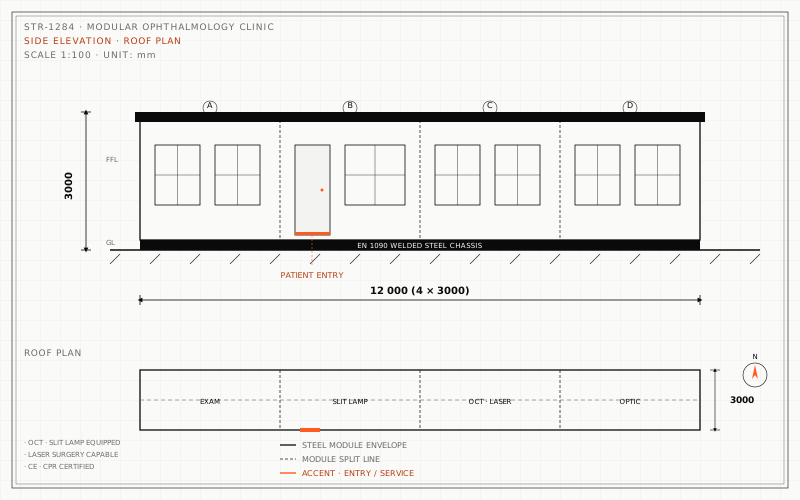
Engineered once, deployable many times.
A modular ophthalmology clinic is a permanent eye care facility built from prefabricated modules with the examination lanes, laser treatment rooms, ophthalmic operating theatre, recovery and pharmacy infrastructure already integrated. structmod modular ophthalmology clinics serve specialty eye hospitals scaling cataract surgery capacity, regional eye care programmes building dedicated infrastructure, university teaching eye hospitals, and humanitarian eye care programmes (Orbis, Sightsavers, CBM-supported) establishing semi-permanent presence. The 12-16 week turnkey delivery accelerates clinical opening compared to 12-24 month conventional builds.
Standard configurations organise the eye clinic around the patient pathway: arrival and visual acuity assessment in the entry zone; examination lanes (typically 4-8) for refraction, slit-lamp biomicroscopy, fundus examination and supplementary testing (OCT, visual fields, corneal topography); diagnostic imaging room (fundus camera, fluorescein angiography); laser treatment rooms for retinal photocoagulation, YAG capsulotomy and SLT glaucoma treatment; ophthalmic operating theatre with operating microscope, phacoemulsification capability, vitrectomy capability where specified; recovery bay with monitored seats; and supporting clinical and administrative infrastructure including dedicated ophthalmic pharmacy.
structmod modular ophthalmology clinics deliver to national cataract programmes (clearing surgical waiting lists in countries with significant cataract blindness burden), to private eye hospital chains opening new locations, to international NGOs running eye care programmes, and to academic ophthalmology departments establishing teaching infrastructure. Lead time is 12-16 weeks from contract signature for stock configurations, 16-20 weeks for full eye hospital configurations including vitrectomy and corneal surgery capability. Compliance includes IEC 60364-7-710 medical electrical, ophthalmic device regulation per destination country, and infection control per national surgical standards.
Secuencia de despliegue típica
- Día 1 — cimentación del emplazamiento verificada, gatos de tornillo o zapatas corridas colocados
- Días 2–3 — módulos elevados a posición con grúa móvil
- Días 3–4 — conexiones entre módulos y sellado de envolvente
- Días 4–5 — conexiones MEP, pruebas húmedas
- Días 5–6 — acabados interiores, instalación de accesorios y equipos
- Día 7 — puesta en marcha, informe FAT, formación y entrega
Spec sheet — STR-4727
| Longitud total | 12.7 m · 41.7 ft |
|---|---|
| Anchura (transporte) | 2,99 m |
| Anchura (desplegado) | 2,99 m |
| Altura (transporte) | 3.20 m |
| Superficie (desplegado) | 38.0 m² |
| Peso en seco | 11.7 t |
| Chasis | Acero laminado en caliente EN 10025 S355JR · EN 1090 EXC-2 |
| Calidad de soldadura | EN ISO 3834-3 |
| Envolvente | Panel sándwich, núcleo PIR 80 mm · λ ≈ 0,023 W/(m·K) |
| Resistencia al fuego | EI-30 · ensayado según EN 13501-2 |
| Suelo | Contrachapado marino sobre EPDM · clasificación antideslizante R-10 |
| Instalación eléctrica | 120/240 V · 60 Hz (especificación EE.UU.) · conforme IEC 60364 |
| Climatización | Unidad compacta de cubierta · MERV-13 |
| Rango de operación | −25 °C a +50 °C ambiente |
| Clasificación de viento | Diseñado para viento básico de 150 km/h (EN 1991-1-4) |
| Diseño sísmico | Según EN 1998-1 (Eurocódigo 8) · clase de ductilidad DCM |
| Transporte | Huella ISO 668 · apto para placa CSC (variantes contenedor) |
| Tiempo de montaje | 4 horas · equipo de 2 personas |
Full drawings, calculation notes, DoP, O&M manual and FAT report included with every unit. Specs indicative — configurable to project requirements.