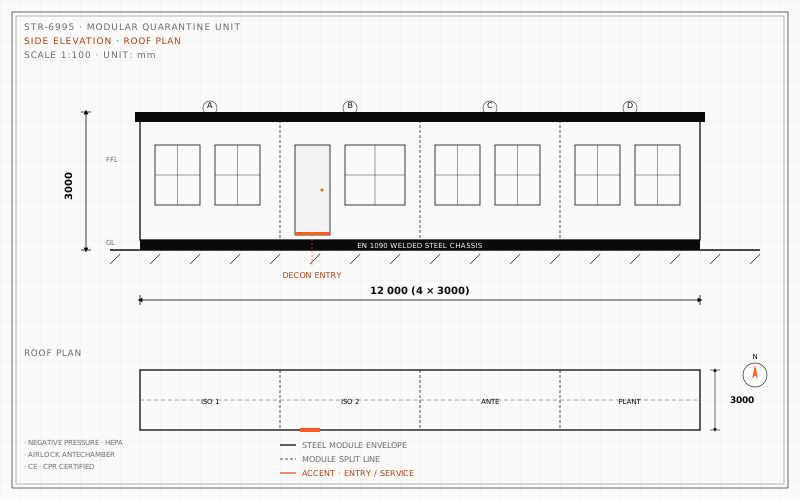
Engineered once, deployable many times.
A modular quarantine unit is a permanent biocontainment facility built from prefabricated modules with the negative-pressure isolation rooms, anteroom airlocks, HEPA-filtered exhaust, infection-control workflow and safe patient/staff flow already integrated. structmod modular quarantine units serve hospitals building dedicated infectious disease capability (in response to COVID-19 lessons learned), public health programmes establishing pandemic-ready infrastructure, port and border health authorities running quarantine for international travellers, and humanitarian programmes responding to outbreaks (Ebola, Marburg, novel respiratory viruses). The 12-16 week turnkey delivery is critical for outbreak response when conventional construction cannot match the timeline.
The infection control architecture is the defining engineering feature. Each isolation room operates at -10 Pa to -25 Pa relative to the corridor, with HEPA H13 filtration on the exhaust stream and discharge above building roofline to prevent re-entrainment. Anteroom airlocks between corridor and isolation room buffer the pressure transition and provide PPE donning/doffing space; airflow direction is corridor → anteroom → isolation room → HEPA exhaust, never reversed. Pressure monitoring with audible and visual alarms alerts staff to any pressure deviation. Single-patient configurations with private bathrooms suit individual quarantine; small-cohort configurations (4-6 beds with shared facilities) suit suspected-case observation pending diagnostic confirmation.
structmod modular quarantine units deliver to national public health programmes building outbreak-ready infrastructure (the lesson from COVID-19 was the inadequacy of conventional hospital infection control for novel respiratory pathogens), to hospitals upgrading existing infectious disease capability, to international travel hubs (airports, seaports, border crossings) implementing public health surveillance, and to research institutions running clinical trials for biocontainment-required pathogens. Lead time is 12-16 weeks from contract signature for standard configurations. Compliance includes WHO Infection Prevention and Control standards, ASHRAE 170 ventilation for healthcare facilities, and CDC Isolation Precautions guidance.
Secuencia de despliegue típica
- Día 1 — cimentación del emplazamiento verificada, gatos de tornillo o zapatas corridas colocados
- Días 2–3 — módulos elevados a posición con grúa móvil
- Días 3–4 — conexiones entre módulos y sellado de envolvente
- Días 4–5 — conexiones MEP, pruebas húmedas
- Días 5–6 — acabados interiores, instalación de accesorios y equipos
- Día 7 — puesta en marcha, informe FAT, formación y entrega
Spec sheet — STR-2374
| Longitud total | 13.4 m · 44.0 ft |
|---|---|
| Anchura (transporte) | 2,99 m |
| Anchura (desplegado) | 2,99 m |
| Altura (transporte) | 3.10 m |
| Superficie (desplegado) | 40.1 m² |
| Peso en seco | 16.4 t |
| Chasis | Acero laminado en caliente EN 10025 S355JR · EN 1090 EXC-2 |
| Calidad de soldadura | EN ISO 3834-3 |
| Envolvente | Panel sándwich, núcleo PIR 80 mm · λ ≈ 0,023 W/(m·K) |
| Resistencia al fuego | EI-30 · ensayado según EN 13501-2 |
| Suelo | Contrachapado marino sobre EPDM · clasificación antideslizante R-10 |
| Instalación eléctrica | 400 V / 50 Hz · trifásico · conforme IEC 60364 |
| Climatización | VRF multi-split · HEPA H13 (médica) |
| Rango de operación | −25 °C a +50 °C ambiente |
| Clasificación de viento | Diseñado para viento básico de 140 km/h (EN 1991-1-4) |
| Diseño sísmico | Según EN 1998-1 (Eurocódigo 8) · clase de ductilidad DCM |
| Transporte | Huella ISO 668 · apto para placa CSC (variantes contenedor) |
| Tiempo de montaje | 2–7 días en obra |
Full drawings, calculation notes, DoP, O&M manual and FAT report included with every unit. Specs indicative — configurable to project requirements.