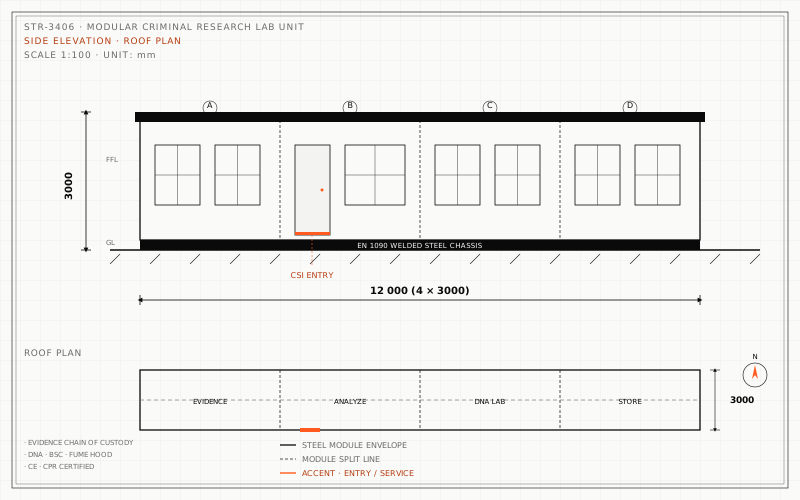
Engineered once, deployable many times.
A modular forensic laboratory is a permanent or semi-permanent crime laboratory built from prefabricated modules with the dedicated workspaces, infrastructure and infection control required for modern forensic science — DNA analysis, toxicology, ballistics, document examination, and evidence chain-of-custody management. structmod modular forensic laboratories serve national police forensic services, regional crime laboratories, military forensic units (mass-graves and conflict-zone investigation), and counter-terrorism evidence-processing facilities. The modular construction approach delivers a fully-fitted forensic capability in 12-16 weeks turnkey — critical when forensic backlogs compromise criminal justice system performance.
Standard configurations organise the laboratory around the forensic disciplines and chain-of-custody requirements: evidence reception with secure storage and accountability, DNA laboratory with PCR amplification and capillary electrophoresis (separated pre-PCR and post-PCR zones to prevent contamination), toxicology with GC-MS/LC-MS instrumentation, ballistics examination with comparison microscopy and recovery tank, documents examination with VSC (video spectral comparator) and ESDA, latent prints development with cyanoacrylate fuming chamber and powder workstations, and supporting spaces (administration, expert witness preparation, evidence release). Cleanroom-grade construction in DNA laboratories controls particle and biological contamination per ISO 14644 class 7 or 8 as required.
structmod modular forensic laboratories support national criminal justice modernisation programmes, post-conflict justice and accountability operations (war crimes investigation, mass grave exhumation), counter-narcotics enforcement (drug analysis throughput), and sexual violence prosecution (rape kit processing). Lead time is 12-16 weeks from contract signature for stock configurations, 16-24 weeks for configurations including specialty disciplines (digital forensics, forensic anthropology, forensic odontology). Compliance reference includes ISO 17025 (laboratory competence), ENFSI guidelines (European Network of Forensic Science Institutes), and destination-country forensic accreditation framework.
Tipik Konuşlanma Sırası
- Gün 1 — saha temeli doğrulandı, vida krikoları veya şerit temel yerleştirildi
- Gün 2–3 — modüller mobil vinçle konumuna yerleştirildi
- Gün 3–4 — modüller arası bağlantılar ve zarf sızdırmazlığı
- Gün 4–5 — MEP bağlantıları, ıslak testler
- Gün 5–6 — iç kaplama, armatür ve ekipman montajı
- Gün 7 — devreye alma, FAT raporu, kullanıcı eğitimi ve teslimat
Spec sheet — STR-3379
| Toplam uzunluk | 13.9 m · 45.6 ft |
|---|---|
| Genişlik (nakliye) | 2,99 m |
| Genişlik (konuşlandırılmış) | 2,99 m |
| Yükseklik (nakliye) | 2.80 m |
| Zemin alanı (konuşlandırılmış) | 41.6 m² |
| Boş ağırlık | 13.9 t |
| Şasi | EN 10025 S355JR sıcak hadde çelik · EN 1090 EXC-2 |
| Kaynak kalitesi | EN ISO 3834-3 |
| Zarf | Sandviç panel, PIR çekirdek 80 mm · λ ≈ 0,023 W/(m·K) |
| Yangın direnci | EI-30 · EN 13501-2'ye göre test edilmiş |
| Zemin | EPDM üzerine denizcilik kontrplak · R-10 kayma sınıfı |
| Elektrik tesisatı | 400 V / 50 Hz · 3 fazlı · IEC 60364 uyumlu |
| İklimlendirme | VRF çok bölmeli · HEPA H13 (tıbbi) |
| Çalışma aralığı | −25 °C ile +50 °C ortam |
| Rüzgar sınıfı | 140 km/s temel rüzgar için tasarlandı (EN 1991-1-4) |
| Sismik tasarım | EN 1998-1 (Eurokod 8) uyarınca · sünek sınıf DCM |
| Nakliye | ISO 668 ayak izi · CSC plakası uygun (konteyner varyantlar) |
| Kurulum süresi | Sahada 2–7 gün |
Tam çizimler, hesap notları, DoP, İ&B kılavuzu ve FAT raporu her ünite ile dahildir. Özellikler gösterge niteliğindedir — proje gereksinimlerine göre yapılandırılabilir.