Engineered once, deployable many times.
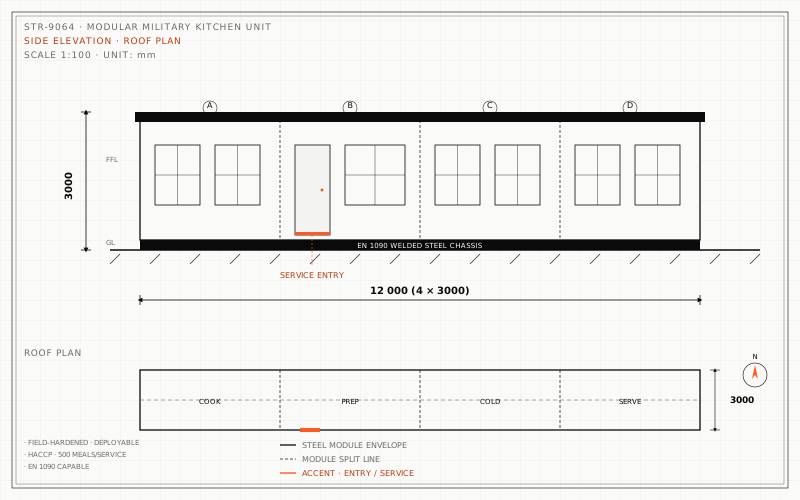
A modular military kitchen unit is a battalion-scale catering facility built from prefabricated modules with the cold storage, dry storage, food preparation, cooking line, plating workflow and cleaning infrastructure required to feed deployed military forces. structmod modular military kitchens produce 1,500-3,000 rations per service cycle (breakfast, lunch, dinner) for battalion or brigade-sized formations. The modular construction approach delivers a fully-equipped catering facility in 10-12 weeks turnkey, then redeploys with the formation as operational requirements change.
Standard configurations organise the kitchen around the food production workflow: cold storage modules (walk-in chillers and freezers sized to multi-day food stocks), dry storage with ration accountability infrastructure, food preparation zones (vegetable prep, meat prep, baking prep — each separated for HACCP compliance), cooking line with combi ovens, bratt pans, fryers and tilting kettles sized to ration count, plating and serving zone, return cleaning workflow with dishwashers and sanitation, and a small mess area for kitchen staff dining. Centralised mechanical room houses gas supply, water heating, ventilation extract and refrigeration plant. Catering equipment is military-spec rugged with simplified maintenance and consumables sourced through standard military supply chains.
structmod modular military kitchens serve deployed forces requiring battalion-level catering — peacekeeping operations, training exercises in remote locations, expeditionary deployments without host nation catering, and humanitarian support operations. Lead time is 10-12 weeks from contract signature. Catering equipment selection (which OEMs, what gas vs electric balance, what portion sizes) is specified against the deploying force's catering doctrine and consumables supply chain. HACCP food safety design follows ISO 22000 principles; ventilation and grease management follow NFPA 96 (or destination-country fire code equivalent).
Tipik Konuşlanma Sırası
- Gün 1 — saha temeli doğrulandı, vida krikoları veya şerit temel yerleştirildi
- Gün 2–3 — modüller mobil vinçle konumuna yerleştirildi
- Gün 3–4 — modüller arası bağlantılar ve zarf sızdırmazlığı
- Gün 4–5 — MEP bağlantıları, ıslak testler
- Gün 5–6 — iç kaplama, armatür ve ekipman montajı
- Gün 7 — devreye alma, FAT raporu, kullanıcı eğitimi ve teslimat
Spec sheet — STR-2956
| Toplam uzunluk | 15.6 m · 51.2 ft |
|---|---|
| Genişlik (nakliye) | 2,99 m |
| Genişlik (konuşlandırılmış) | 2,99 m |
| Yükseklik (nakliye) | 3.10 m |
| Zemin alanı (konuşlandırılmış) | 46.6 m² |
| Boş ağırlık | 13.6 t |
| Şasi | EN 10025 S355JR sıcak hadde çelik · EN 1090 EXC-2 |
| Kaynak kalitesi | EN ISO 3834-3 |
| Zarf | Sandviç panel, PIR çekirdek 80 mm · λ ≈ 0,023 W/(m·K) |
| Yangın direnci | EI-30 · EN 13501-2'ye göre test edilmiş |
| Zemin | EPDM üzerine denizcilik kontrplak · R-10 kayma sınıfı |
| Elektrik tesisatı | 400 V / 50 Hz · 3 fazlı · IEC 60364 uyumlu |
| İklimlendirme | VRF çok bölmeli · HEPA H13 (tıbbi) |
| Çalışma aralığı | −25 °C ile +50 °C ortam |
| Rüzgar sınıfı | 140 km/s temel rüzgar için tasarlandı (EN 1991-1-4) |
| Sismik tasarım | EN 1998-1 (Eurokod 8) uyarınca · sünek sınıf DCM |
| Nakliye | ISO 668 ayak izi · CSC plakası uygun (konteyner varyantlar) |
| Kurulum süresi | 3 saat · 2 kişilik ekip |
Tam çizimler, hesap notları, DoP, İ&B kılavuzu ve FAT raporu her ünite ile dahildir. Özellikler gösterge niteliğindedir — proje gereksinimlerine göre yapılandırılabilir.