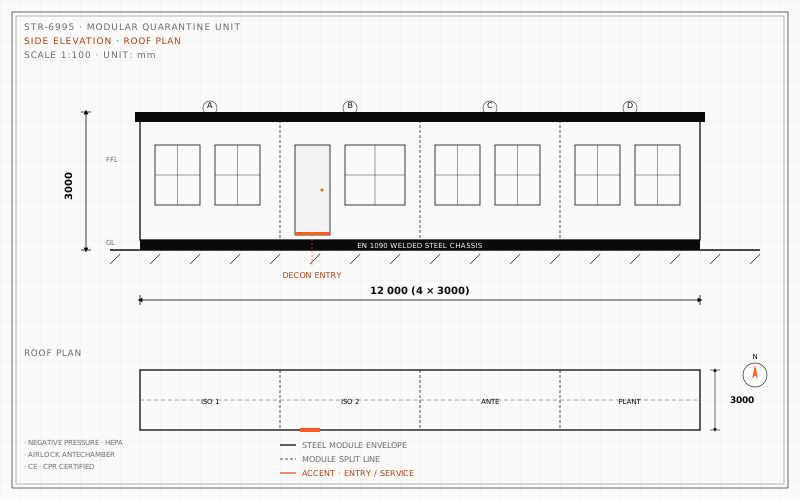
Engineered once, deployable many times.
A modular quarantine unit is a permanent biocontainment facility built from prefabricated modules with the negative-pressure isolation rooms, anteroom airlocks, HEPA-filtered exhaust, infection-control workflow and safe patient/staff flow already integrated. structmod modular quarantine units serve hospitals building dedicated infectious disease capability (in response to COVID-19 lessons learned), public health programmes establishing pandemic-ready infrastructure, port and border health authorities running quarantine for international travellers, and humanitarian programmes responding to outbreaks (Ebola, Marburg, novel respiratory viruses). The 12-16 week turnkey delivery is critical for outbreak response when conventional construction cannot match the timeline.
The infection control architecture is the defining engineering feature. Each isolation room operates at -10 Pa to -25 Pa relative to the corridor, with HEPA H13 filtration on the exhaust stream and discharge above building roofline to prevent re-entrainment. Anteroom airlocks between corridor and isolation room buffer the pressure transition and provide PPE donning/doffing space; airflow direction is corridor → anteroom → isolation room → HEPA exhaust, never reversed. Pressure monitoring with audible and visual alarms alerts staff to any pressure deviation. Single-patient configurations with private bathrooms suit individual quarantine; small-cohort configurations (4-6 beds with shared facilities) suit suspected-case observation pending diagnostic confirmation.
structmod modular quarantine units deliver to national public health programmes building outbreak-ready infrastructure (the lesson from COVID-19 was the inadequacy of conventional hospital infection control for novel respiratory pathogens), to hospitals upgrading existing infectious disease capability, to international travel hubs (airports, seaports, border crossings) implementing public health surveillance, and to research institutions running clinical trials for biocontainment-required pathogens. Lead time is 12-16 weeks from contract signature for standard configurations. Compliance includes WHO Infection Prevention and Control standards, ASHRAE 170 ventilation for healthcare facilities, and CDC Isolation Precautions guidance.
Tipik Konuşlanma Sırası
- Gün 1 — saha temeli doğrulandı, vida krikoları veya şerit temel yerleştirildi
- Gün 2–3 — modüller mobil vinçle konumuna yerleştirildi
- Gün 3–4 — modüller arası bağlantılar ve zarf sızdırmazlığı
- Gün 4–5 — MEP bağlantıları, ıslak testler
- Gün 5–6 — iç kaplama, armatür ve ekipman montajı
- Gün 7 — devreye alma, FAT raporu, kullanıcı eğitimi ve teslimat
Spec sheet — STR-2374
| Toplam uzunluk | 13.4 m · 44.0 ft |
|---|---|
| Genişlik (nakliye) | 2,99 m |
| Genişlik (konuşlandırılmış) | 2,99 m |
| Yükseklik (nakliye) | 3.10 m |
| Zemin alanı (konuşlandırılmış) | 40.1 m² |
| Boş ağırlık | 16.4 t |
| Şasi | EN 10025 S355JR sıcak hadde çelik · EN 1090 EXC-2 |
| Kaynak kalitesi | EN ISO 3834-3 |
| Zarf | Sandviç panel, PIR çekirdek 80 mm · λ ≈ 0,023 W/(m·K) |
| Yangın direnci | EI-30 · EN 13501-2'ye göre test edilmiş |
| Zemin | EPDM üzerine denizcilik kontrplak · R-10 kayma sınıfı |
| Elektrik tesisatı | 400 V / 50 Hz · 3 fazlı · IEC 60364 uyumlu |
| İklimlendirme | VRF çok bölmeli · HEPA H13 (tıbbi) |
| Çalışma aralığı | −25 °C ile +50 °C ortam |
| Rüzgar sınıfı | 140 km/s temel rüzgar için tasarlandı (EN 1991-1-4) |
| Sismik tasarım | EN 1998-1 (Eurokod 8) uyarınca · sünek sınıf DCM |
| Nakliye | ISO 668 ayak izi · CSC plakası uygun (konteyner varyantlar) |
| Kurulum süresi | Sahada 2–7 gün |
Tam çizimler, hesap notları, DoP, İ&B kılavuzu ve FAT raporu her ünite ile dahildir. Özellikler gösterge niteliğindedir — proje gereksinimlerine göre yapılandırılabilir.